
How to Play Letter Boxed: Complete Rules Guide for NYT's Daily Word Puzzle
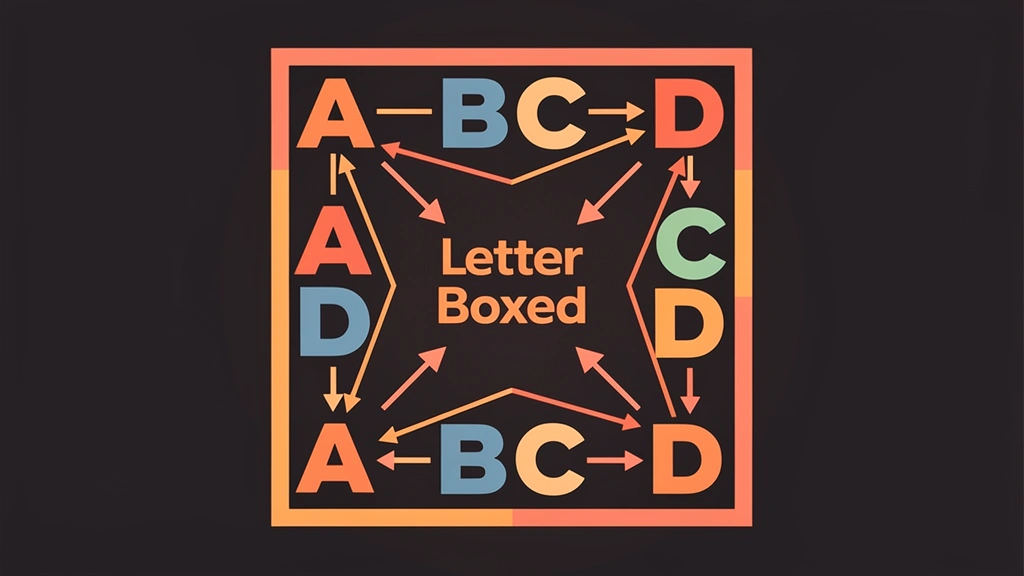
Letter Boxed is a daily word puzzle published by The New York Times that looks approachable at first glance and reveals its real depth within your first three moves. The board shows you all twelve letters upfront, arranged three per edge on a square. Your goal is to use every letter in as few connected words as possible. One rule governs everything: consecutive letters within each word cannot come from the same edge. That constraint alone is responsible for the puzzle's strategic richness and the reason it keeps experienced players coming back.
What Is Letter Boxed and How Did It Start?
Letter Boxed was designed by Sam Ezersky, a puzzle editor at The New York Times, and launched in February 2019 after a soft launch period in 2018. It joined the NYT Games suite well before the word-puzzle boom of 2022 and established a dedicated player community that now includes over 55,000 members on the r/NYTLetterBoxed subreddit.
The game occupies a distinct position among NYT puzzles. Unlike Wordle, which is symmetrical and requires no vocabulary beyond common five-letter words, Letter Boxed rewards a broader vocabulary and the ability to think several words ahead. Unlike the Crossword, which demands encyclopedic knowledge, Letter Boxed gives you every piece of information you need on day one. The challenge is structural, not encyclopedic.
How the Board Works
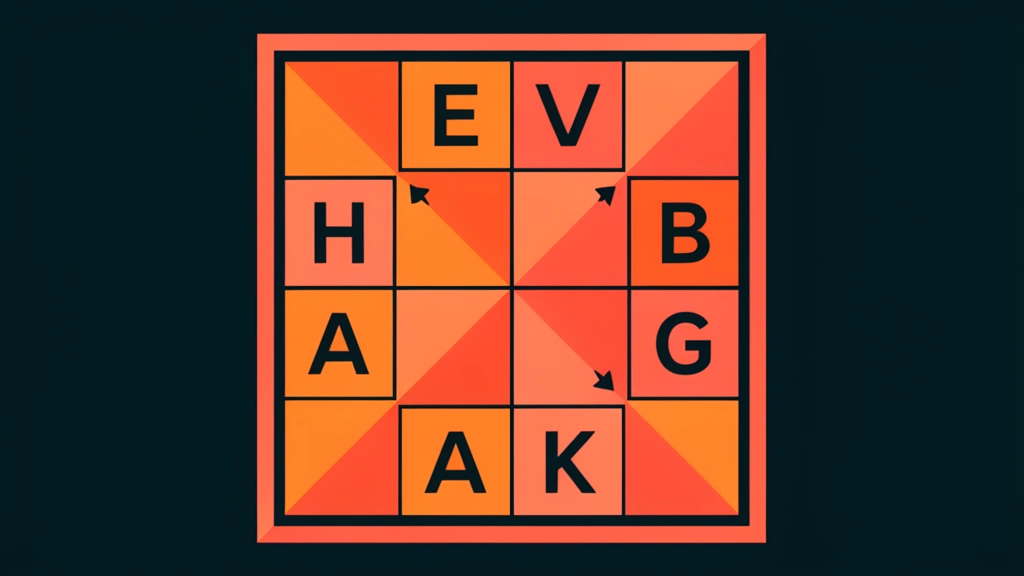
The board is a square with three letters on each of its four edges: top, right, bottom, and left. Twelve letters total, none repeated. The specific letters change every day, but the geometry never does.
When you build a word, you connect letters by drawing lines between them. The game enforces the edge rule automatically: after you select a letter from the top edge, your only valid next choices are letters on the right, bottom, or left edges. From there, any edge except the one you just used becomes available again. This alternating-edge requirement means the spatial position of every letter matters as much as the letter itself.
A word that exists in every dictionary might be completely unplayable on a particular board because two of its consecutive letters land on the same edge. This is the puzzle's most important insight to internalize: you are not just finding words, you are finding words that can be physically traced on this specific board.
The Full Rules
Three-letter minimum. Every word in your solution must contain at least three letters. Two-letter words are rejected regardless of their common use.
No same-edge consecutive letters. Within any single word, no two letters in a row can come from the same edge. You must hop between edges with every letter selection, though you can return to any edge as long as you did not use it in the immediately preceding step.
Letters can be reused. Once a letter turns grey, it has been used at least once, but it remains fully available. The grey color tracks coverage, not availability.
Word chaining is mandatory. The last letter of every completed word becomes the first letter of your next word automatically. You cannot break the chain or choose a new starting point mid-puzzle. Planning where each word ends is therefore as important as planning what word to use.
All twelve letters must be covered. Your solution is complete only when every letter on the board has been used at least once across all your words combined.
Curated English vocabulary only. The NYT maintains a specific accepted word list for Letter Boxed. Standard English words of three or more letters qualify. Proper nouns, abbreviations, hyphenated forms, and archaic spellings generally do not.
What Happens in a Typical Game
Before you select your first letter, spend thirty seconds scanning the board. Locate the vowels and note which edges hold them. Then identify any letters that might cause problems: Q without a U nearby, J or X in a difficult position, or Z isolated from useful connectors. These are the letters you want to use early while you still have maximum freedom over your word choices.
Your first word sets the course for everything that follows, because it determines which letter you will be forced to start with next. A word that ends on a useful pivot letter gives you more flexibility. A word that ends on a difficult letter creates an immediate constraint in round two.
The grey letters accumulating on the board are your progress indicator. Watch for any edge where letters are piling up unused, and make sure your word planning curves back toward those edges before you run low on options.
What Makes a Good Score?
The NYT does not publish an official par for Letter Boxed. Two words is the ideal result, called a two-solve. Three words is excellent. Four is solid. Five and six words represent a completed puzzle achieved through persistence rather than optimization. The streak counter tracks how many consecutive days you have solved the puzzle, and many players find it more motivating than their word count on any given day.
Frequently Asked Questions
Does Letter Boxed always have a two-word solution?
Yes. The New York Times guarantees every puzzle can be solved in exactly two words. The previous day's two-word solution is revealed each morning when the new puzzle launches, so you can always verify the optimal path after the fact.
Can I reuse letters in Letter Boxed?
Yes. Letters can be reused across multiple words and even within the same word, as long as no two consecutive letters within that word come from the same edge. A grey letter is a tracking indicator showing a letter has been used at least once, not a restriction preventing further use.
Is there a time limit in Letter Boxed?
No. The puzzle has no timer. It remains available until midnight, when it resets to the next day's puzzle. You can reset and retry as many times as you want without any penalty.
What words are accepted in Letter Boxed?
Letter Boxed uses a curated word list maintained by NYT editors. Standard dictionary English words of three or more letters are accepted. Proper nouns, abbreviations, and hyphenated words are not valid entries.
How is Letter Boxed different from Wordle?
Wordle asks you to guess a hidden five-letter word through process of elimination. Letter Boxed shows you all the letters and asks you to construct a chain of words using them, subject to the edge-alternation constraint. Wordle tests deductive reasoning in a bounded space; Letter Boxed tests vocabulary, multi-step planning, and spatial pattern recognition in an open-ended format.
Related Letter Boxed Guides
Once you understand the rules, the next step is learning how to use them strategically. The Letter Boxed strategies and tips guide covers the bridge letter method, reverse solving, and the long-word priority approach that experienced players rely on to reach two-word solutions consistently.
For players specifically focused on the two-word solution, the dedicated two-word solution guide explains how to read the board for structural clues and find the optimal path before giving up and looking it up.
If you want external tools to help during the puzzle, the Letter Boxed solver guide reviews the most accurate tools available and explains when using one builds skill versus when it prevents improvement.
To see where Letter Boxed fits among all NYT games, the NYT games ranked by difficulty guide puts every game in context using time, vocabulary demand, and strategic depth as criteria.