
Letter Boxed Strategies and Tips: How to Win Every Daily Puzzle
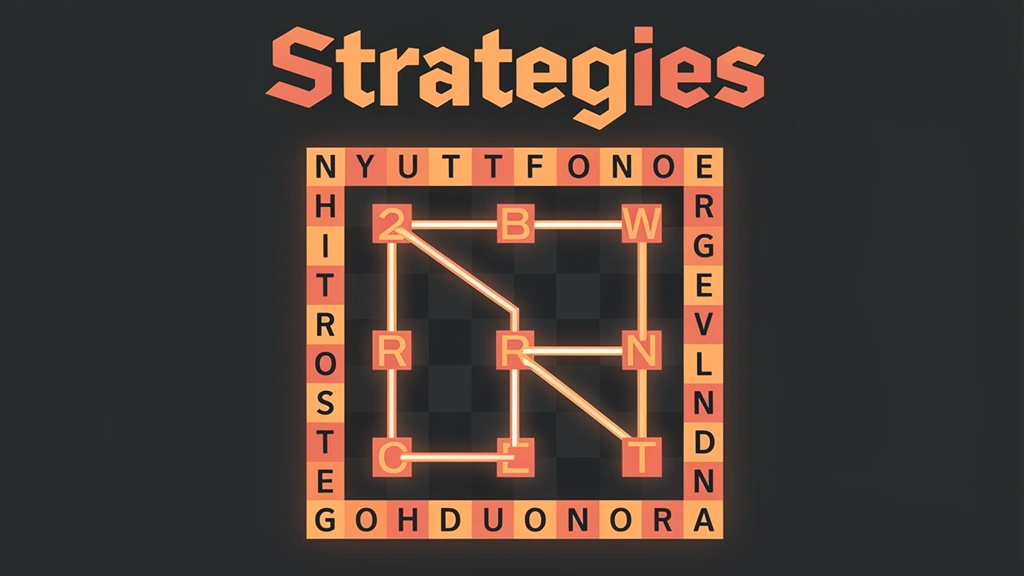
Most Letter Boxed players reach five or six words on their first attempts and wonder why the two-word solution feels impossible. The answer is almost never vocabulary. It is planning structure. Players who consistently solve in two or three words are not working from a bigger dictionary; they are working from a different mental model of the puzzle. This guide covers that mental model from first principles, organized by experience level.
Why Letter Boxed Rewards Strategy Over Vocabulary
The edge-alternation rule transforms Letter Boxed from a vocabulary test into a routing problem. On any given day, only a subset of the words you know can actually be built on the board, because many English words contain consecutive letters that happen to share the same edge. The board determines what is possible. Your strategy determines what you choose within that possibility space.
A player who approaches each word in isolation tends to complete the puzzle eventually but uses many words to do it. A player who thinks about the whole chain before confirming the first word tends to finish in significantly fewer. The strategic edge in Letter Boxed is almost entirely about chain planning.
What to Do Before You Pick Your First Letter
Scan the board for thirty seconds before touching anything. During that scan, do three things. First, locate every vowel and note which edges they sit on. A board where all vowels cluster on two edges is harder than one where vowels spread across three or four, because you will need to return to those vowel-heavy edges repeatedly. Second, identify your rare consonants: any Q, X, J, Z, or W. These letters have fewer words built around them and become progressively harder to incorporate as the board fills. Third, look for natural clusters between letters on different edges that commonly appear together in English words, which suggests a viable opening word.
Beginner Strategy: Clear the Difficult Letters First
The most reliable entry-level strategy is to build your first word around the hardest letter on the board. Find the letter with the fewest possible continuations and make that letter appear in your first word. The reason is mechanical: at the start of the puzzle you can begin from any letter on any edge, which gives you maximum freedom. By the third or fourth word, your options are constrained by where previous words ended. Clearing difficult letters early prevents the scenario where your fourth word must start with R and end on a letter that begins the only path to clearing an unused J or Z.
Intermediate Strategy: Think About the Bridge Letter
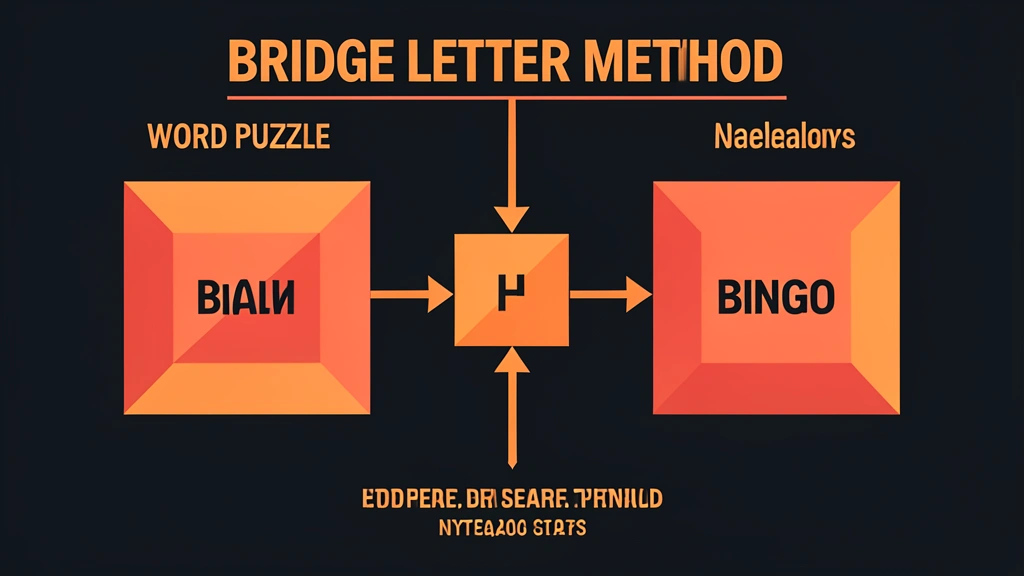
The bridge letter is the endpoint of your first word and the mandatory starting letter of your second word. In a two-solve, the bridge letter is arguably the most important single choice in the entire puzzle. A strong bridge letter is one that begins many English words of varying lengths. S, T, R, N, L, and common vowels like A and E are strong bridge letters because they open access to a wide range of continuations.
Before confirming your first word, ask two questions: does this word end on a letter that commonly starts other words in English, and does that potential starting letter sit on an edge that still holds uncovered letters you need to reach? When you find yourself unable to complete the puzzle in three words, check your bridge letters first. A bridge that works well in vocabulary terms but sits on an already-cleared edge often leaves you unable to reach the remaining uncovered letters efficiently.
Intermediate Strategy: Plan the Endpoint of Every Word
Most players focus on the letters a word contains. Strong players focus equally on the letter a word ends on. Every time you confirm a word, you are committing to a specific starting position for the next word, and that commitment has consequences for every word that follows.
Before confirming any word, ask: if I end here, what words can I start from this letter, and do any of them efficiently cover what remains? If the answer is that no viable continuation exists, consider whether an alternative word of similar coverage but a better endpoint is available. This endpoint-first thinking is the clearest marker of an experienced Letter Boxed player.
Advanced Strategy: Reverse Solving
Reverse solving is a technique most players discover accidentally after being stuck late in a puzzle. Instead of asking what word can I make from my current endpoint, you ask what letters do I still need to cover, and what word starting from my current endpoint would cover them.
In practice, this means scanning the grey letters already used and the uncovered letters separately. The uncovered letters represent a constraint set. You need a word that starts at your endpoint, includes all or most of those uncovered letters, and ideally ends on a position that makes the remaining cleanup easy. Applying this reverse approach from the very beginning gives your first word a concrete target instead of an open-ended search.
Advanced Strategy: The Long-Word Priority
In Letter Boxed, word length is an efficiency multiplier. A nine-letter first word that covers nine of your twelve letters with good edge distribution leaves you needing only three more letters in word two. A three-letter first word leaves nine letters for subsequent words, creating far more chain decisions and more opportunities for the endpoint trap.
This is counterintuitive because in everyday language, long words feel harder. In Letter Boxed, long words are often easier to work with strategically because they do more coverage per word slot. Common long-word patterns that appear frequently include words ending in -TION, -MENT, -NESS, -LING, and -ATION, as well as words beginning with RE-, UN-, OUT-, and OVER-.
The Most Common Mistakes to Stop Making
Choosing small words early is the most universal error. Three and four-letter words feel safe because they are easy to confirm, but they leave the board crowded and your chain highly constrained. Default to longer words wherever possible, even if they feel uncertain at first.
Ignoring the endpoint until it becomes a crisis is the second most common error. Every word confirms a new mandatory starting position. Treating each word as an isolated vocabulary exercise instead of a chain link is what causes the stuck-at-the-end feeling that characterizes four-plus-word solutions.
Forcing rare letters late is the third error. If Q, Z, J, or X remain unused when you are three words in, your remaining words must incorporate them while also starting from a fixed endpoint. This is one of the hardest positions in the game and almost entirely avoidable by prioritizing those letters in word one.
Frequently Asked Questions
What is the best strategy for Letter Boxed beginners?
Start by identifying the rare or difficult letters on the board, typically Q, X, J, and Z. Build your first word around clearing one or more of these letters while you still have full freedom over your starting point. Then look for a long second word that starts from your endpoint and covers most of the remaining letters. This approach avoids the endgame trap of being stuck with hard letters and no viable path to them.
How do you find a two-word solution in Letter Boxed?
Look for a long first word of seven or more letters that uses letters from at least three different edges. Then find a second word that starts with the endpoint of word one and covers all remaining letters. The key is evaluating bridge letters before confirming your first word. A first word that ends on a common word-starting letter like S, T, R, or N gives you far more viable paths for the second word than one that ends on J, Q, or Z.
Should you start Letter Boxed with the most difficult letters?
Generally yes. Rare consonants have fewer words built around them, and using them in your first word while you have full starting-point freedom is the clearest way to avoid being forced into an impossible combination late in the puzzle. A first word that clears your hardest letter and ends on a strong bridge letter sets up every subsequent decision favorably.
What does reverse solving mean in Letter Boxed?
Reverse solving means identifying the letters you still need to cover and then looking for a word that starts at your current mandatory endpoint and uses those specific remaining letters. Instead of generating words forward from your endpoint and hoping one covers what remains, you start from the coverage gap and work backward to find a word that bridges your position to the solution.
How important is vocabulary for Letter Boxed?
Vocabulary matters but planning matters more. A player with an average vocabulary who thinks about bridge letters and endpoints will consistently outperform a larger-vocabulary player who approaches each word in isolation. The edge rule means that knowing many words is only useful if those words can actually be traced on today's board, which makes strategic pattern recognition a more reliable competitive advantage than raw vocabulary size.
Related Letter Boxed Guides
If you are new to the game and want to understand the rules before diving into strategy, the complete how-to-play guide covers the board geometry, all six rules, and how a typical game unfolds from start to finish.
For a dedicated deep-dive into the mechanics of the two-word solution specifically, the two-word solution guide walks through the long-word method, the reverse approach, and how to read board structure for two-solve clues before you give up and look up the answer.
When you want external help on a specific puzzle, the solver guide reviews the most accurate Letter Boxed tools and explains how to use them as post-attempt learning aids rather than first-resort answer machines.
To understand how Letter Boxed compares to every other NYT game in difficulty and time commitment, the NYT games ranked guide provides a full comparison across all nine games currently in the NYT suite.